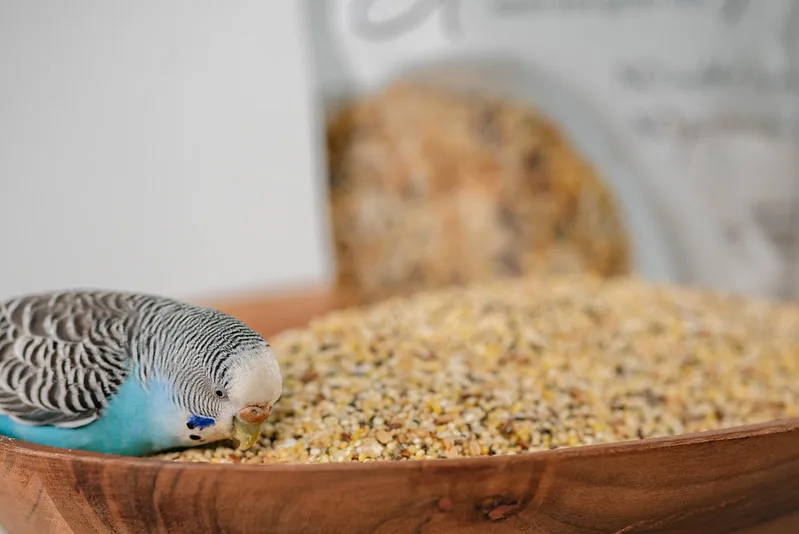
Small parrots and lovebirds: small does not mean simple
Kakariki describes a genus-level Cyanoramphus group rather than one species, and lovebirds include several species with different behaviour and conservation contexts. Pairing decisions depend on compatibility, sex, space and history. Never accept an unweaned bird to finish hand-feeding at home, and do not let a colour mutation replace verified identity.
Care, housing and daily welfare
Plan around the adult bird rather than the juvenile seen in a photograph. Safe horizontal movement, suitable perches, species-appropriate food, predictable sleep, foraging and positive-reinforcement training all matter. Noise tolerance, air quality, cleaning time, veterinary access and a long-term contingency plan should be assessed before an enquiry.
Species tendency versus individual evidence
Species-level information helps estimate likely size, voice, diet and activity, but it cannot predict the history or behaviour of a particular bird. Ask how the individual responds to unfamiliar people, handling, transport, changes in routine and independent play. Observe body language in recent, unedited situations where possible. Age, health, previous reinforcement and the quality of socialisation can outweigh a short species description. Make the final decision from documented individual evidence and a realistic household assessment, not from a promise that every member of the species is quiet, affectionate or able to talk.
Budget and long-term planning
Calculate more than the initial acquisition cost. Appropriate housing, replacement perches and enrichment, species-suitable food, routine and emergency veterinary care, identification, documentation, transport and holiday arrangements all continue throughout the bird’s life. Larger or more destructive species can make equipment replacement a significant recurring cost, while specialised feeders may increase food preparation and cleaning time. Agree who will provide daily care and what happens after changes in housing, employment, health or family structure. A sustainable plan is a welfare requirement, not an optional extra.
How to verify a real bird
Ask for the scientific name, current date, individual identification, age, diet, socialisation history, health information and documents relevant to origin and destination. Recent media should clearly correspond to that individual. A guide, family page or old photograph must never be treated as evidence of current stock.
Species and taxa covered
- Budgerigar — Melopsittacus undulatus
- Monk Parakeet / Quaker — Myiopsitta monachus
- Bourke’s Parakeet — Neopsephotus bourkii
- Princess Parrot — Polytelis alexandrae
- Superb Parrot — Polytelis swainsonii
- Red-rumped Parakeet — Psephotus haematonotus
- Kakariki group — Cyanoramphus spp.
- Lineolated Parakeet — Bolborhynchus lineola
- Turquoise Parrot — Neophema pulchella
- Elegant Parrot — Neophema elegans
- Scarlet-chested Parrot — Neophema splendida
- Rock Parrot — Neophema petrophila
- Peach-faced Lovebird — Agapornis roseicollis
- Fischer’s Lovebird — Agapornis fischeri
- Masked Lovebird — Agapornis personatus
- Black-cheeked Lovebird — Agapornis nigrigenis
- Lilian’s Lovebird — Agapornis lilianae
- Red-headed Lovebird — Agapornis pullarius
- Black-collared Lovebird — Agapornis swindernianus
Decision checklist
- Can the home support the adult size, flight and equipment needs?
- Can everyone tolerate the natural voice and daily activity pattern?
- Is an avian veterinarian accessible and budgeted for?
- Can origin, identity and applicable paperwork be verified?
- Is there a realistic care plan for holidays and future life changes?
Taxonomy and conservation sources: World Parrot Trust Encyclopedia · CITES Checklist.