Species Overview
| Characteristic | Detail |
|---|---|
| Scientific Name | Ara ararauna × Ara macao |
| Size | 85–95 cm, 900–1,100 g |
| Wingspan | 100–115 cm |
| Lifespan | 50–60 years |
| Vocabulary | 30–50 words |
| Noise Level | Moderate-loud |
| Family Suitability | Experienced owners, families with older children |
| CITES Status | CITES Appendix II |
About the Catalina Macaw (Rainbow Macaw)
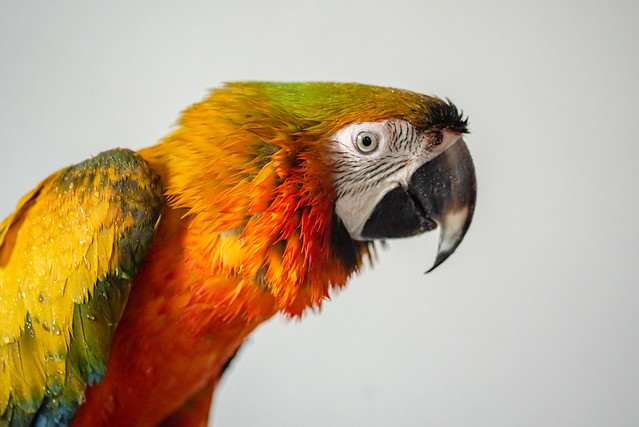
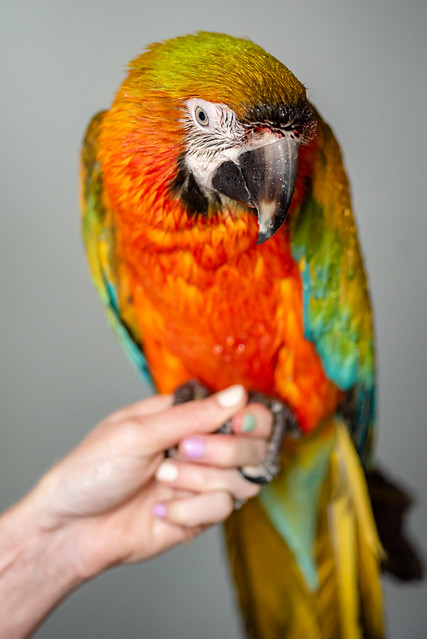
The Catalina Macaw, also known as the Rainbow Macaw, is a first-generation hybrid between the Blue-and-Yellow Macaw (Ara ararauna) and the Scarlet Macaw (Ara macao). Every Catalina Macaw is visually unique — a one-of-a-kind combination of orange, green, blue, and red that cannot be precisely replicated in any two individuals. It is the avian equivalent of a custom painting.
For an individual Catalina Macaw, ask us to confirm current availability, parentage records, identification, provenance, raising history and any veterinary information currently held.
Plumage and appearance
The Catalina inherits the structural blue of the ararauna on its flight feathers and tail, the vibrant red and orange chest of the macao, and a brilliant green across the upper wings. The face shows a middle path between the two species — often displaying orange and red facial striping rather than the pure bare skin of the ararauna. No two Catalinas look exactly alike, making each bird truly individual.
Temperament
The Catalina is widely considered to offer the best temperament balance of its two parent species. It combines the sociable, affectionate disposition of the Blue-and-Yellow Macaw with the energetic, playful spirit of the Scarlet. Hand-raised from birth, our birds are genuinely people-oriented — they enjoy being handled, seek shoulder rides, love head scratches, and actively participate in family life.
Training and language
Catalina Macaws are good talkers by macaw standards. With consistent positive reinforcement training starting at 3–6 months, most birds develop a vocabulary of 30–50 words or short phrases. They excel at step-up commands, target training, and learning simple tricks. Short daily training sessions (5–10 minutes) with food rewards are the most effective approach.
Diet and Nutrition
The Catalina Macaw's dietary needs closely follow those of its two parent species:
- Quality macaw pellets (40–50%): Harrison's, Zupreem, or Roudybush — the dietary foundation
- Fresh fruit and vegetables (30–40%): mango, papaya, apple, pear, sweet pepper, broccoli, kale, carrot
- Nuts and seeds (10–15%): walnuts, macadamia, almonds, sunflower seeds — as treats and enrichment
- Cooked legumes (occasional): chickpeas, lentils, edamame for protein variety
Avoid: avocado, chocolate, caffeine, onion, garlic, alcohol, and any salted or heavily processed human food. Fresh water should be changed at least twice daily.
Gallery
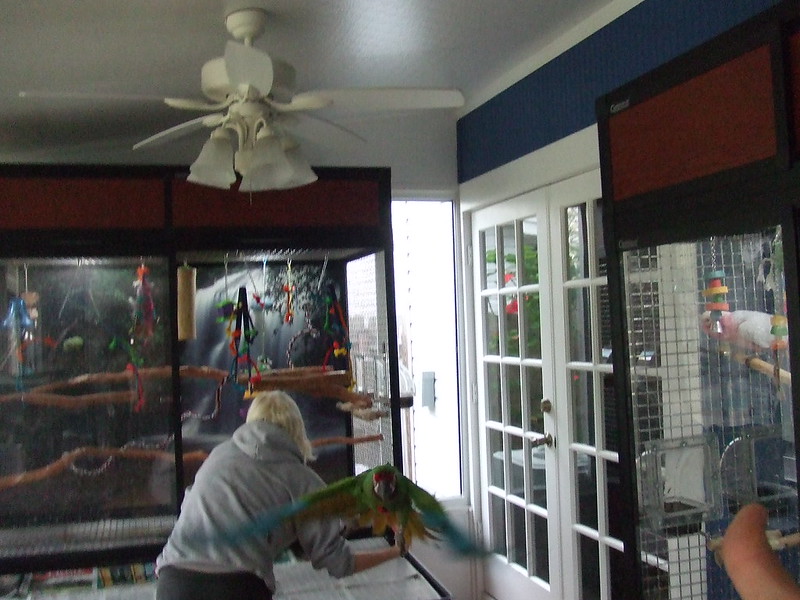
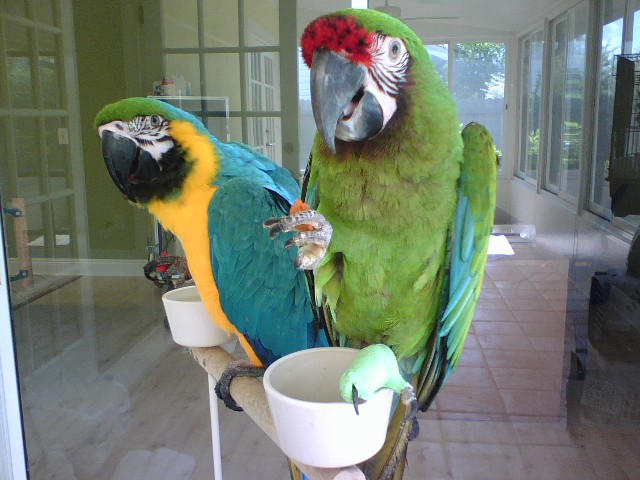
Real photographs from our breeding facility in Llíria, Valencia — not stock images.
See more in our full gallery →
Frequently Asked Questions
What is a Catalina Macaw?
A Catalina Macaw is a first-generation hybrid between the Blue-and-Yellow Macaw (Ara ararauna) and the Scarlet Macaw (Ara macao). The result is a visually spectacular bird with multicolour plumage — orange chest, green wings, blue flight feathers — that varies uniquely between individuals.
Are Catalina Macaws good pets?
Yes. Hand-raised Catalinas are affectionate, playful, and deeply bonded to their human family. They combine the gentle sociability of the Blue-and-Yellow with the energy of the Scarlet. They require significant daily interaction and mental stimulation to thrive.
Do Catalina Macaws talk?
Yes. They are good talkers by macaw standards, typically learning 30–50 words and short phrases with consistent training. Training begun at 3–6 months yields the best results.
Do Catalina Macaws require CITES documentation?
The regulatory treatment of a hybrid must be checked using its parentage, specimen records and proposed transaction. Ask the relevant authorities which CITES and animal-health documents apply.
How much does a Catalina Macaw cost in the UK?
Prices depend on the individual bird and written offer. Ask which identification, provenance, veterinary and CITES records are held for that bird.
For budgeting context, see our Catalina Macaw price guide; if you are weighing alternatives, compare the Catalina and Blue-and-Yellow Macaw comparison.
How long does a Catalina Macaw live?
50–60 years with proper care — a lifetime commitment that should be planned for carefully.
Can you deliver a Catalina Macaw to the UK?
A proposed route must be assessed for the individual bird, its hybrid records and destination. Transport is discussed only after authority, carrier, animal-health and entry requirements can be confirmed.
What size cage does a Catalina Macaw need?
Minimum 120×90×150 cm, ideally 180×90×180 cm or larger. Their wingspan can reach 115 cm, so they need genuine space to stretch. Daily out-of-cage time in a safe, supervised area is essential.