
Blue-and-gold Macaw Eggs
Ara ararauna identification and the preparations needed for a large-macaw project.
Species identity and important distinctions
Blue-and-gold and blue-and-yellow macaw are common names for Ara ararauna. Confirm that name in both parents’ records: do not confuse this species with a Hyacinth Macaw or a Catalina hybrid. Planning must cover incubation and the subsequent needs of a large macaw. Owning an incubator is not the same as having the facilities, time and skills to raise the hatchling.
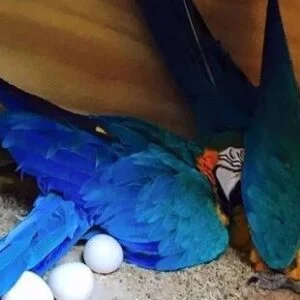
Is an egg the right starting point?
An unhatched egg is not a ready-to-keep companion bird. Before considering one, arrange help from an experienced aviculturist and an avian veterinarian. Make a plan for the hatchling, including a suitable brooder, close observation and specialist feeding support. If you cannot provide that continuity of care, discuss a fully weaned bird instead.
This guide supports informed enquiries; it does not assess your equipment or a particular egg. Use the scientific identity above when asking a specialist for advice. Adult appearance, talking ability and temperament cannot be promised from an egg listing.
Records to request before any payment
Ask for traceable records that connect the proposed egg to its identified breeding pair. A generic photograph, a claim of “fertile” or a seller’s price list is not sufficient evidence. Keep the answers together so that the breeder, veterinarian and relevant authorities can review the same information.
- Exact species or documented hybrid parentage and parent-pair reference.
- Laying date, whether incubation has started, and known handling or transport history.
- What observations support any fertility or viability statement, and their dates.
- Documented captive origin, seller identity and the papers required for the proposed route.
- Written price, what it includes, responsibilities and the applicable cancellation or refund terms.
Plan incubation for the species and equipment
HARI’s incubation guidance emphasises calibrated equipment, temperature and humidity monitoring, ventilation, hygiene and an appropriate turning schedule. There is no universal setting or calendar that this catalogue can safely prescribe for every parrot, machine and stage of development. Ask your specialist to establish the protocol for the identified species and the actual incubator.
Maintain an individual record rather than relying on an estimated hatch date alone. Record relevant measurements and observations under experienced guidance; weight trends and candling may form part of that assessment. Handling can damage a developing egg. Do not repeatedly candle, rotate or manipulate it simply to obtain photographs, and do not attempt assisted hatching from an online description.
Handling, transport and arrival checks
Do not assume a postal or courier service is suitable for a hatching egg. Ask how handling, environmental changes, timing and transfer into the incubation plan would be managed. Packaging or a delivery promise cannot guarantee continued viability. Agree on what to do if a consignment is delayed, damaged or arrives with incomplete documents.
On arrival, compare the consignment with the written records and contact the responsible professional about any discrepancy. Do not improvise cleaning, disinfecting, repair or treatment of a suspect egg. Seek advice before introducing it into an incubator shared with other eggs.
Animal-health rules and wildlife-trade documents
Animal-health controls and wildlife-trade controls are separate checks. The European Commission publishes rules specifically covering captive birds and their hatching eggs, including movements within the EU and entry from outside it. A general page about pet travel does not establish that a commercial egg movement is allowed.
CITES permits and certificates are issued by national authorities. Requirements depend on the exact identity, source, transaction and route; hybrid parentage may also matter. Ask the exporting and importing authorities to confirm the current position before payment or dispatch. This catalogue is not a permit, a certificate or confirmation that your destination can be served.
Be ready for hatching and the months after it
Arrange ongoing support before an expected hatch, not after a problem arises. A brooder and the incubation setup serve different purposes. The transition to post-hatch care, monitoring and feeding must be planned with a qualified professional; poor hand-feeding technique can seriously harm a chick.
Think beyond hatching: future housing, enrichment, noise, daily care and access to an avian veterinarian must fit the adult bird as well. A successful hatch does not by itself mean the bird is ready for sale, transfer or independent feeding. Keep development and source records throughout the process.
Questions before you enquire
Are these eggs currently in stock?
Contact our team for current availability. Tell us which variety interests you and your destination so we can help with the next steps.
Does “fertile” guarantee that an egg will hatch?
No. Fertility, ongoing viability and successful hatching are different matters. Handling, egg history and incubation conditions can affect the outcome. No percentage hatch rate or guaranteed result is stated here.
What incubation temperature and humidity should I use?
Obtain a species- and equipment-specific protocol from an experienced aviculturist or avian veterinarian. Calibration, ventilation, turning and the egg’s stage matter alongside temperature and humidity. This guide deliberately does not provide one universal setting.
How much does an egg cost?
Contact our team for a personalised quote. Include the variety, quantity and destination so we can explain pricing, documentation and transport options.
Can an egg be sent to my country?
Not automatically. Animal-health rules, wildlife-trade controls and transport arrangements must all be checked for the identified egg and route. An enquiry category or translated page does not mean a destination is eligible.
How can I ask about a particular variety?
Use the contact button on this page. Share the variety name, your destination and any questions about preparation or care, and our team will guide you through the next steps.
Sources and further reading
- Hagen Avicultural Research Institute (HARI)
Individual egg monitoring, calibrated equipment and specialist mentorship.
- European Commission
Animal-health requirements for captive birds and hatching eggs.
- CITES
Permit and certificate system; consult national management authorities.
- Integrated Taxonomic Information System — Ara ambiguus
Taxonomy and the distinction between trade names and scientific identity.
- Avibase — Ara ararauna
Taxonomy and the distinction between trade names and scientific identity.