| Factor | Indian Ringneck | Alexandrine |
|---|---|---|
| Size | Medium and light | Larger and more robust |
| Beak | Strong | Larger and more powerful |
| Voice | High and clear | Deeper, loud and harsh |
| Housing | Wide for horizontal flight | Longer and especially strong |
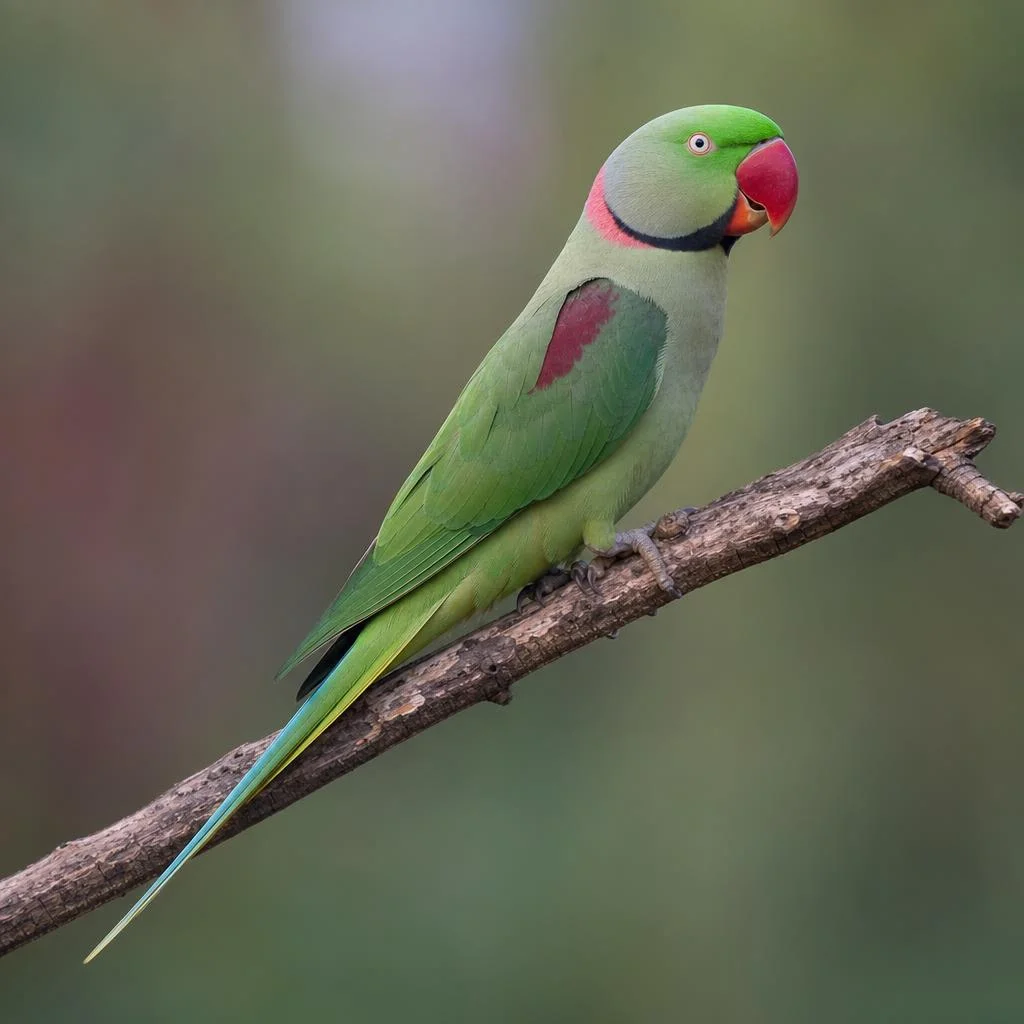
| Identification | No red shoulder patch | Maroon shoulder patch |
How to tell them apart
An Alexandrine has a larger body, heavier beak and a characteristic maroon patch on each wing. An Indian Ringneck lacks that shoulder patch and has a lighter build. Adult males of both can develop a visible neck ring, so the ring alone does not prove species, age or sex.
Voice and talking ability
Both use carrying contact calls and may learn human sounds. Alexandrines generally have a deeper, more powerful voice. Talking ability depends on the individual and training and must never be guaranteed. Consider neighbours, rest hours and natural contact calls before choosing.
Space and durable equipment
Long tails require a wide setup with clear movement between perches. The Alexandrine’s heavier beak makes robust fittings especially important. Both need safe flight, foraging, appropriate branches and reward-based training. Enrichment supports good routines but cannot remove normal vocal behaviour.
Availability and documentation
Request the scientific name, identification, origin, current diet, veterinary history and applicable paperwork. Confirm the individual being discussed and ask for recent media. Do not choose solely for a rare colour: a mutation does not reduce space, socialisation or care needs.
Related reading
Frequently asked questions
Which bird is larger?
The Alexandrine is larger and has a more powerful beak.
Which talks better?
Both may learn sounds, but neither species provides a guarantee.
How do I identify an Alexandrine?
Its size and the maroon patch on each wing are useful distinguishing features.