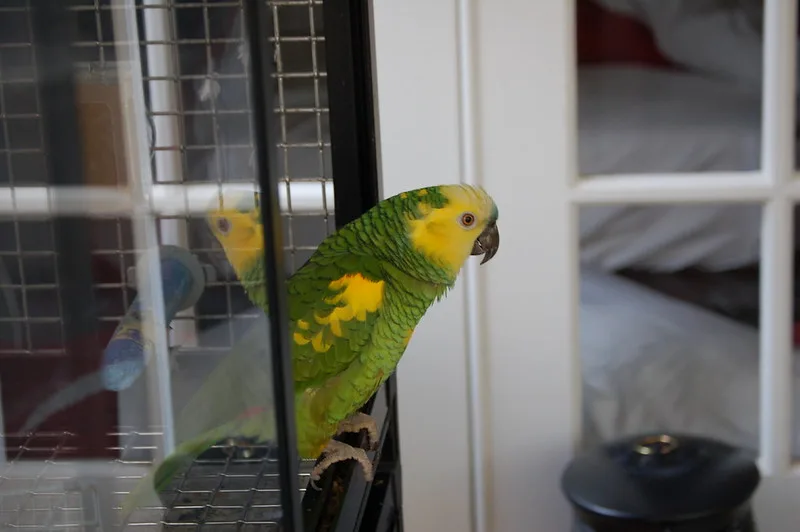
Establish the bird’s actual status
Ask for the bird’s age, species, current weight, rearing method and evidence that it eats independently. “Nearly weaned” is not fully weaned. Request written weight and feeding records. If you find a wild bird, do not improvise a parrot diet; contact a licensed wildlife rehabilitator or the appropriate local authority.
Safe decisions by development stage
| Stage | What to monitor | Safest action |
|---|---|---|
| Dependent chick | Warmth, crop function, weight and feeding response | Direct avian-veterinary or demonstrably experienced professional supervision |
| Weaning bird | Actual food intake and daily weight trend | Offer appropriate foods without forcing or abruptly withdrawing support |
| Fully weaned bird | Stable independent eating and weight | Transfer with a written diet and transition plan |
Why there is no universal schedule
Meal frequency and quantity depend on species, developmental stage, crop function, body temperature and health. Copying a timetable from an online post can be dangerous. Formula must be designed for psittacine chicks and prepared according to its manufacturer and the supervising professional. Do not make casual ingredient substitutions.
Hygiene and urgent warning signs
Keep hands, utensils and the preparation area clean, and make each feed fresh. Seek urgent avian advice for breathing difficulty, food at the nostrils, a crop that fails to empty, lethargy, vomiting, burns, weight loss or a missing feeding response. Never force-feed a cold, weak or unresponsive chick.
Weaning must be gradual
Weaning should not be rushed to meet a collection or sale date. Suitable foods must be offered while actual intake and body weight are monitored. A chick that pecks at food may still consume too little. An avian vet or demonstrably experienced rearer should decide when assisted meals can be reduced.
Checks before a bird changes home
Confirm that the bird maintains its weight, eats independently, comes with a written diet and has received suitable health assessment. Ask for a demonstration of familiar foods and a plan for the first week. Taking home a fully weaned parrot reduces preventable risk and lets the family focus on a calm transition.
Related reading
Frequently asked questions
Should I buy an unweaned baby parrot?
The safer choice is a fully weaned bird. If assisted feeding is medically necessary, it requires direct avian-professional supervision.
Can I use a homemade formula?
Do not improvise substitutions. Use an appropriate commercial formula and a professional plan.
How is full weaning confirmed?
The bird should eat independently and maintain an appropriate weight trend across multiple days.