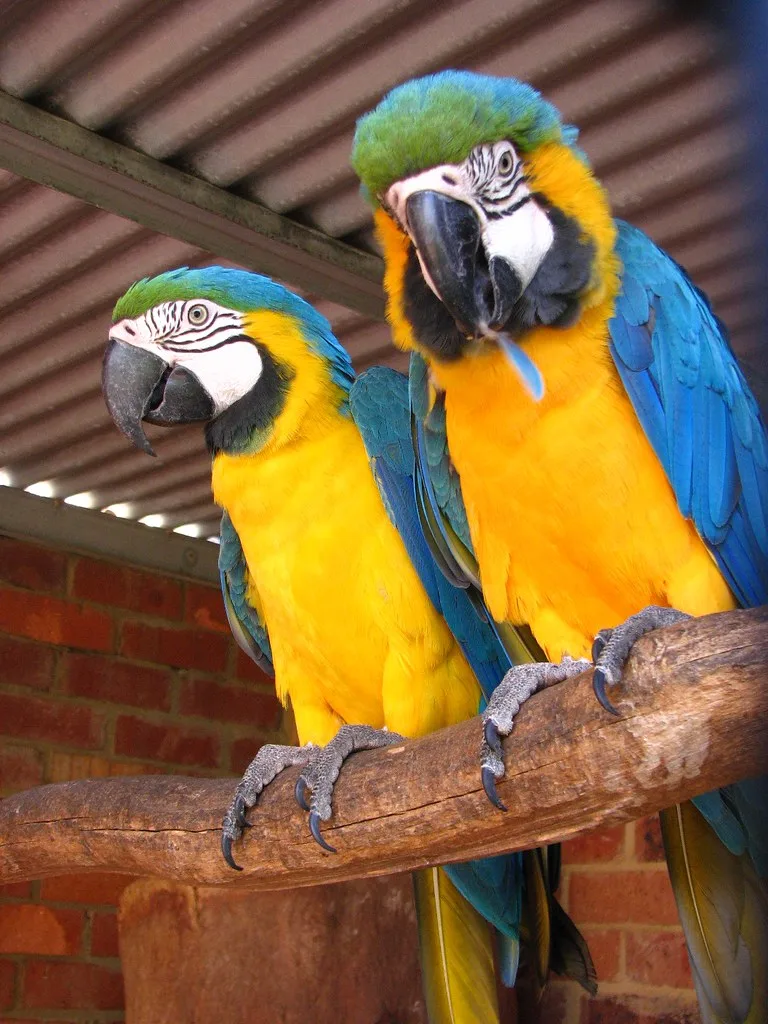
Blue-and-yellow Macaw (Ara ararauna)
This is one of the most recognisable large macaws. An individual may be curious, engaged and responsive to reward-based training. Its size and strength demand robust housing, daily movement and realistic noise planning. A sociable macaw also needs uninterrupted rest and the skills to occupy itself without constant handling.
Scarlet and green-winged macaws
A Scarlet Macaw combines red, yellow and blue, while a Green-winged Macaw has a broad green wing band and powerful build. General temperament descriptions are only a starting point. Socialisation, health, previous handling and daily routines shape the individual. Both require generous space, substantial enrichment and access to an avian vet.
Hyacinth and smaller macaws
The Hyacinth Macaw is exceptionally large and has specialised needs; rarity is not a responsible selection criterion. Species in genera such as Primolius and Diopsittaca are smaller, but remain active parrots with strong beaks and carrying voices. “Mini macaw” does not mean low maintenance or automatically suitable for a flat.
A useful comparison checklist
Measure usable cage and exercise space, discuss household and neighbour tolerance for noise, budget for durable equipment, and locate avian veterinary care. Confirm the scientific species name, individual identification and applicable CITES paperwork. A photograph and a seller’s common name cannot establish identity or lawful origin on their own.
Choose the individual responsibly
Two birds from the same species can respond differently to touch, strangers and change. Ask for verifiable information about age, current diet, behaviour, veterinary history and documents. The suitable species is one your household can support for decades through holidays, house moves and unexpected costs, not simply the most striking search result.
Related reading
Frequently asked questions
How many macaw species are there?
Several recognised species are distributed across multiple genera. Specialist directories provide current taxonomy.
Is a mini macaw easy to keep?
Not automatically. Smaller macaws still need space, training, enrichment and veterinary care.
Which macaw makes the best companion?
It depends on the individual bird, experience, housing, noise tolerance and long-term resources.